


Dog Kibble Food extruder
Dry dog food is made using a food extruder also commonly referred to as a dog food machine. This is a comprehensive summary of the process. A set of ingredients is combined in a mixer. The set of ingredients comprises of both wet and dry components which are mixed to form moist dough.
Rich Experience
Our working team have experienced more than 10 years on extrusion processing.It is one specialized is engaged in the twin-screw and single screw food expanding machinery enterprises, company with research and development, production, sales of all kinds of machinery and complete sets of equipment for the main business, my company brings together industry expert team work for ten years, not only in the best extrusion technology research, more efforts to continuously explore in terms of food technology, so that the customer production to the market leading food.
Wide Product Range
Our mainly products: Snacks food extruder, fish food machine, dog food machine, pet food machine, puff snacks machine,core filling snacks machinery, Corn Puff Snack Extruder, pet chews food machine, pet snacks machine, corn flakes production line, lab twin screw extruder, twins screw extruder, double screw extruder, niknaks machine, cheetos food machine, textured soya protein food machine, soya nugget machine, pellets snacks production line, and so on…
Excellent Customer Service
Installation + training: After delivery, according to the needs of the purchasing customer, the after-sales service personnel will arrive at the designated place of the customer, to install the equipment in time.
Service + tracking: After-sales service personnel need to do a follow-up survey of each customer responsible for their own use of equipment, and conduct detailed records and targeted problems to solve.
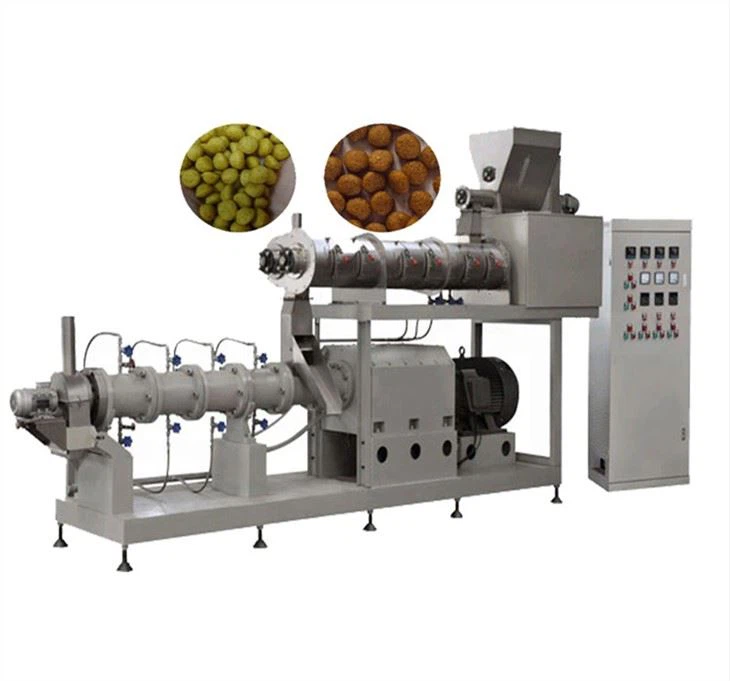


Dog food beside in pet food, it used in many area, including pet snack foods, snack food, tooth sticks, knot, pressure bone, nutrition powder (liquid), concentrated dog food powder, dry food, wet food, semi-dry food, canned, etc. The In order to maximize its nutritional function, puffing process is one of the main ways.
Use the puffing process(Dog food extruder) to make dog food aim:
To improve the palatability of pet food;
To change or improve the nutritional value of pet food;
To improve the pet food digestion and absorption rate;
Change the shape and structure of pet food, making it easy to pet feeding;
Change the pet food different nutritional indicators, such as: to reduce the water in order to produce food shelf life, is conducive to storage;
Change the food bulk density, extrusion granulation, briquetting to increase the density of food density;
To kill a variety of mold, Salmonella and other harmful substances, improve the safety of pet food, health;
Dog Kibble Food Machine - How Dry Dog Food is made
Due to its financial sustainability and a growing market for full processed dog meals, the dry dog food manufacturing process has been refined and made more accommodating to dog's nutritional needs. Dry dog food is made using a food extruder also commonly referred to as a dog food machine. This is a comprehensive summary of the process.
A set of ingredients is combined in a mixer. The set of ingredients comprises of both wet and dry components which are mixed to form moist dough.
The moist dough is the heated in a pre-conditioner. This is in preparation of introducing it to the dog food machine.
The dough is then introduced to the extruder where most of the cooking occurs under intense heat and pressure. Once the dough is properly cooked it is forced through a die which cuts and shapes it into small pieces. The small pieces are then allowed to cool under standard air pressure ultimately forming the kibble.
Kibble is then dried in an oven. This step ensures the moisture content is lower than 10%
A final cooling phase follows before the kibble is passed through a spray that adds flavor. The spraying is optional although it adds value to the product.
The kibble is finally packaged. The standard packages range from boxes weighing a pound to larger bags of 40-50 pounds.
Pet Food Processing Principles and Possibilities
Manufacturing dry pet food involves the same processes as many other processed foods. The most common application for coating of dry pet food kibble or pet treats involves applying sequential coatings of liquid fat/oil, followed by adding a liquid digest or palatant, and lastly, applying a powdered digest.
Because of the wide variety of products, there are multiple pet food coating system options, including continuous coating drum, centrifugal, gravity, blending, and screw feeder systems, depending on the manufacturer's specific desired product characteristics.
Key principles for continuous drum-based coating are product residence time, product bed width consistency, and depth throughout the length of the drum. Another vital design principle is utilizing independent, expanded liquid and dry application zones. In this example there are four independent zones, one for each liquid product; a transition zone; and a dry ingredient application zone. These zones allow us to apply the liquid and dry additions at multiple points over a set distance of product travel rather than to introduce them at a single point of contact. When properly positioned above the base product as it travels through the drum, the coating of each product piece can match the correct amount of liquid and dry ingredients.
Coating Drum
The size of the drum is determined by the amount of product to be coated, the product density, and the number of liquid and dry applications required. Drum diameters vary between 30–72" (76-183cm) in diameter and in lengths from 96–180" (244-457cm). Properly engineered coating drums feature horizontal product flights that are designed to gently lift and fold the product as the drum rotates. The drum operates at a slight decline towards discharge to allow the product to travel through the drum. An inlet cone directs the product into the coating drum cylinder and prevents spillage while a discharge spiral acts as a weir to help control the product bed and the dwell time.
An advantage of the coating drum method is its ability to control both product dwell time and product piece exposure. The lifting and folding of product throughout the length of the drum ensures each product piece is brought to the surface repeatedly for targeted application of the liquid and dry coatings. This method of exposure and expanded coating zone application is far more reliable than other drop-through coating methods that coat product falling vertically through a single point of contact then rely on a post blending process for product-to-product contact. The coating drum method ensures consistent, evenly coated product. Please note that optimally finish coated product requires a consistently metered flow of base product into the drum.
Continuous coating drum systems feature mist/dust collection shrouds or fully enclosed drums to prevent exposing plant personnel to the applied liquid and dry ingredients. An external collector is also part of the mitigation process. Clean-in-place foaming and spray bars are recommended for ease of sanitation at the end of the run.
Liquid Coating System
As the kibble or treat enters the coating drum, the first of the two liquids, fat/oil is applied. Application rates typically vary between 2–10% by weight of base product throughput. Chicken fat is commonly used and heated to a range of 120–140°F (49–60°C) and usually done in a water or steam jacketed tank. A shaft mounted mixer is used for agitation. Once at temperature, the product is transferred to a use-tank that supplies product to the fat/oil spray manifold.
A positive displacement product supply pump is used to pull product from the heated supply tank and to transfer to the manifold. A three-way valve located at the manifold is used to supply the metered flow of fat to be applied. In addition, a liquid product flow meter is included for rate verification. When there is a pause or stop condition during production, the three-way valve diverts and continuously circulates fat through the loop until production resumes.
The fat/oil spray manifold features multiple spray nozzles in series with the first nozzle located ~8" (20cm) from the beginning of the drum. The length of the liquid coating zone varies depending on the size of the drum but is usually 24–36" (61–91cm) in length. The manifold is positioned at the proper height and angle to target the product traveling in the drum below, and air assist and positive shut-off nozzles generate the desired spray pattern. Using high-volume, low-pressure air avoids over atomization of the fat. Each nozzle produces an approximate 6–8" (15–20cm) diameter spray pattern, and the nozzles can be staggered and offset along the manifold for optimal coverage. Each nozzle includes an internal piston assembly that is used as a positive shut-off for standby or end of run conditions. Also, the piston functions as a cleanout mechanism to prevent build-up of liquid on the nozzle tip. A solenoid valve controls air on both sides of the piston head to regulate the piston actuation. The clean out cycle is done during the coating process, lasts only about one-quarter of a second, and does not interfere with the coating process.
After the liquid fat is applied, a second manifold positioned within the drum applies the liquid digest. Liquid digest application rates typically vary from 2–4% by weight of base product throughput. This product is also heated, to a range of 90–120°F (32–49°C). The manifold and the application process are identical to the liquid fat product described above.
The manifold assemblies are frequently mounted to pullout trolley assemblies for ease of sanitation.
Dry Coating System
After the liquid coatings have been applied, product travels through a short transition zone of about 18" (46cm). The transition zone separates the liquid coating process from the applied dry digest powder. The transition zone allows the base product to absorb the digest prior to dry coating. The dry powder or palatability enhancer is typically applied at 1.0–1.5% by weight of base product for canine products and 2–3% for feline products.
The dry coating system consists of two pieces of equipment, an auger-based powder feeder and a scarf plate dry ingredient distributor. The powder feeder features a product supply hopper, an internal agitator assembly, a positive displacement auger, and a dispensing tube. The output of powder is determined by the speed and ratio of the motor and gearbox assembly. Depending on the layout, the powder feeder can be mounted to load cells for gravimetric control and verification of powders.
The powder feeder is positioned outside and perpendicular at the discharge end of the coating drum. The dispensing tube deposits product onto the inlet of the scarf plate distributor, a 6" (15cm) wide vibratory conveyor with a mirror finish and a bias-cut tray that extends into the coating drum. The metered digest powder travels down the length of the tray and passes over in an integrated weir that spreads the powder across the width of the tray. After the weir assembly, the powder transitions to the bias cut of the tray. As the tray tapers towards the discharge end, a curtain of digest is produced. This 24–48" (61-122cm) curtain (or dry coating zone) allows for a gradual application of the digest powder onto the liquid coated product below. The scarf plate distributor is frequently mounted to a pullout trolley assembly for ease of cleaning during sanitation. After the dry seasoning is applied, the finish coated product discharges from the coating system, ready for packaging.
Pet Food - What Are the Real Effects of Extrusion?

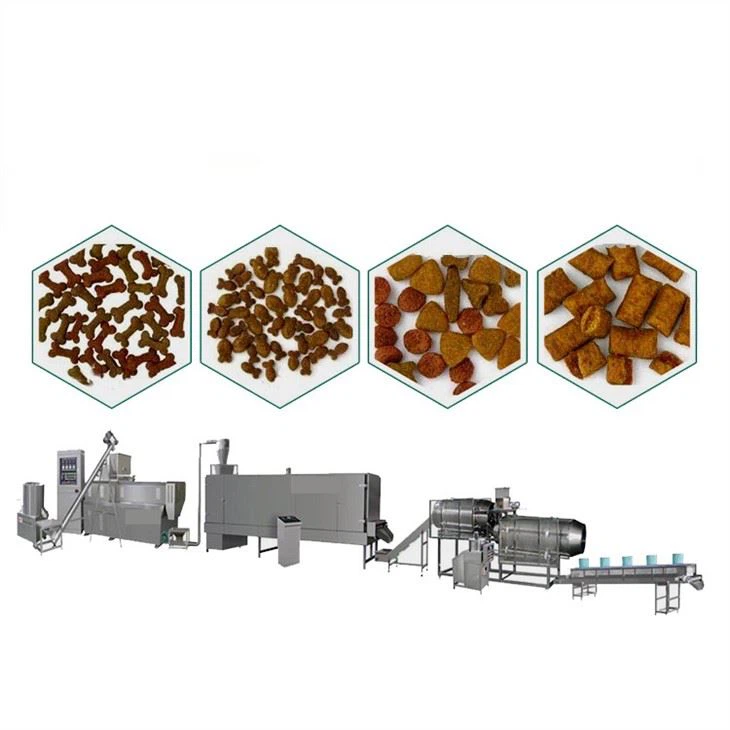

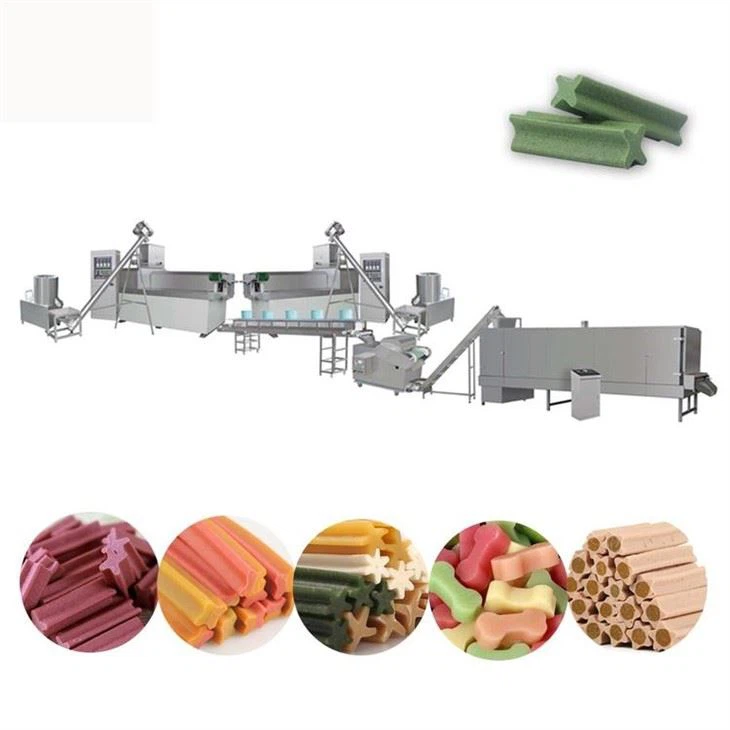
Extrusion is one of the most used forms when it comes to producing and manufacturing pet food. Despite having been in the market for so many years, the industry still faces challenges to solve in order to produce increasingly better food in terms of palatability and nutritional quality.
The reason this method is so widely used is because of its versatility in blending, detoxifying, sterilizing, and texturing a wide variety of foods and ingredients used in food formulas. As we know, the combination of humidity, pressure, time, temperature and mechanical shear is the key to the process. So let's analyze the effects of the extrusion process on Pet Food.
Effects of extrusion on starch
Pet food formulas typically contain up to 50% starch, which is derived primarily from grains. The starch found in cereal grains is organized in concentric layers of semi-crystalline or amorphous regions in the endosperm. Extrusion cooking can cause the swelling and breakage of the cereal granules, the modification of the crystalline spectra, the increase of the solubility in cold water, and the reduction of the viscosity of the starch and the partial or complete release of amylose. and amylopectin. When the extrusion process is carried out with a low moisture content, the starch granules can be partially transformed by the application of heat. This results in loss of crystal structure and granular shear, leading to the formation of a homogeneous phase called starch melting or gelatinization.
This gelatinization affects the viscosity of the mixture and the food and, consequently, the physical and chemical characteristics of the extrudates. High screw speed (400 rpm) during pet food production has been shown to reduce viscosity.
During the extrusion of starches, factors such as temperature, the level of humidity before extrusion, the content of amylose and lipids, can lead to structural modifications of the starch granules. However, these changes may differ between cereal and potato starch. Gelatinization has been shown to improve faeces and tapioca starch digestibility, but no effect on the digestibility of wheat starch, for example, has been seen.
Other studies have shown that retrograde starch (AR3) in certain foods is easily fermented in the large intestine, producing short-chain fatty acids; but not all retrograde starches are equally fermentable, and in these cases an improvement in intestinal health is seen, a reduction in transit time and an increase in the weight of animal feces.
Effects of extrusion on lipids
The nutritional value of lipids from sources such as tallow, poultry fat, vegetable oil, and marine oil can be affected during extrusion as a result of hydrogenation, isomerization, polymerization, and lipid oxidation processes.
The rate of oxidation is affected by many factors, such as the type of fat and its content, humidity and the degree of expansion. Fat unsaturation increases the challenge of proper preservation.
In addition, some trace elements such as iron, and the use of biological antioxidants can play an important role in post-extrusion oxidation.
In various studies, no effect on digestibility has been seen in cases where lipid complexes were formed during extrusion. For their part, inactivated lipase and lipoxidase, when present in food, result in less fatty acid oxidation.
Effects of extrusion on protein
The protein component of pet food usually constitutes between 25 and 70% of the dry matter. The effects of extrusion on the protein component can be beneficial or detrimental to the nutritional characteristics of foods.
As for the positive effects, mild denaturation of proteins can make them more susceptible to enzymes and thus improve their digestibility. Undesirable effects of heat treatment include the destruction and racemisation of amino acids, the destruction of bonds between peptides and extra-peptides, and a number of other chemicals.
Various studies found that the digestibility of crude protein in dog and cat food is not affected by the extrusion process. In fact, if done correctly, extrusion improves the degree of inactivation of protease inhibitors in wheat flour and thus increases the digestibility of legume proteins. In addition, the effect of processing various plant and animal protein sources on digestibility in dogs has been studied, and it was stated that diets with extruded feed, even with different vegetables as protein sources, provided adequate levels of protein and amino acids. digestible.
Effects of extrusion on vitamins
Many vitamins are sensitive to chemical treatments. Its stability depends on the chemical structure of each vitamin in question and can be reduced or modified by exposure to heat, light, oxygen, moisture and minerals.
Vitamins differ greatly in structure and chemical composition, so their stability during extrusion is variable. However, the known extrusion effects are more negative than in other cases, mainly for vitamins of group B, A and E.
In pet foods, extrusion cooking has been shown to be detrimental to vitamin concentration, with oxidation being the main degradation mechanism. The temperature of the extrusion process can be a decisive factor for the retention of vitamins, since it has been found that in an extrusion with temperatures between 130-135 ° it leads to greater losses than with temperatures of approximately 107 °.
Factors to Consider When Choosing Dog Food Processing Machinery
Choosing the right machinery for making dog food is an important decision. Here are some things to think about:
What to Look for Beef bone grinder for sale
When you're thinking about getting a machine for making dog food, there are some things to check. Look at how easy it is to use and clean. Think about the size and how much food it can make. Also, check if it meets safety standards.
Compare Different Models
Not all machines are the same. Some might have cool features that others don't. Compare different models to see which one fits your needs the best. Maybe one is easier to use, or another can make more food at once.
Think About Your Budget
Money matters, so it's good to know how much you can spend. Some machines might cost more upfront, but they could save you money in the long run. Consider the overall benefits and how much you'll use it.
Long-Term Benefits
Investing in good machinery is like planting a seed for the future. Quality machines might be a bit more expensive, but they can last longer and give you better results. Think about the long-term benefits and how the machine will help you over time.
Remember, finding the right machinery is like picking the perfect tool for a job. Take your time, compare your options, and choose the one that fits your needs and your budget the best.
About Our Company
Our factory established in 2012. Our manufacturing factory is more than 6000m², workers more than 60 person. Our working team have experienced more than 10 years on extrusion processing. Especially on Service after selling. Our engineer have worked in more than 30 countries for extrusion service yet. It is one specialized is engaged in the twin screw and single screw food expanding machinery enterprises, company with research and development, production, sales of all kinds of machinery and complete sets of equipment for the main business.
FAQ
Hot Tags: Dog Kibble Food extruder, China Dog Kibble Food extruder manufacturers, suppliers, factory, commercial pasta production, profile extruder, pasta making equipment, small scale extruder, quiet operation extruder, extruder series
Send Inquiry
