

Why Choose Us?
Rich Experience
Our working team have experienced more than 10 years on extrusion processing.It is one specialized is engaged in the twin-screw and single screw food expanding machinery enterprises, company with research and development, production, sales of all kinds of machinery and complete sets of equipment for the main business, my company brings together industry expert team work for ten years, not only in the best extrusion technology research, more efforts to continuously explore in terms of food technology, so that the customer production to the market leading food.
Wide Product Range
Our mainly products: Snacks food extruder, fish food machine, dog food machine, pet food machine, puff snacks machine,core filling snacks machinery, Corn Puff Snack Extruder, pet chews food machine, pet snacks machine, corn flakes production line, lab twin screw extruder, twins screw extruder, double screw extruder, niknaks machine, cheetos food machine, textured soya protein food machine, soya nugget machine, pellets snacks production line, and so on…
Wide Range of Product Exports
At present, the company equipment exported to Europe, Egypt, Jordan, South Africa, Iran, Italy, France, the Netherlands, UK, Russia, Turkey, Ukraine, belarus, America: Canada, the United States, Chile, suriname, Brazil; Africa: Brazil, Malawi, mozambique, Nigeria and Congo (cloth), lesotho, Asia: Burma, Vietnam, the Philippines, Thailand, Indonesia, Malaysia, India, kazakhstan, kyrgyzstan, uzbekistan, north Korea, Afghanistan, Iran, Lebanon, tajikistan and other countries.
Excellent Customer Service
Installation + training: After delivery, according to the needs of the purchasing customer, the after-sales service personnel will arrive at the designated place of the customer, to install the equipment in time.
Service + tracking: After-sales service personnel need to do a follow-up survey of each customer responsible for their own use of equipment, and conduct detailed records and targeted problems to solve.
What is Extruder?
An 'Extruder' is an extruding machine that is used to extrude metals like copper, steel, aluminum and plastics. Some brittle metals can be extruded very easily through the extruder. The main function of an extruder is conversion of raw material directly into finished goods ready for supply and packaging.
-

Breakfast Cereal Food Processing Machine
Breakfast cereal machine can produce corn flakes, breakfast cereals etc,they are some kinds of Add to Inquiry -
Breakfast Cereals Extruder Production Line
The breakfast cereal production line uses corn flour and other grains as the main raw materials to Add to Inquiry -
Corn Flakes Making Production Line
Corn flakes making machine can produce corn flakes which is one kind of nutritional convenient food Add to Inquiry -
Twin Screw Extruder
Twin screw extrusion machine is a widely used industrial process for producing a wide range of Add to Inquiry -
Meltblown Cloth Extruder Line
The extruder can be used for extruding thermo-plastics such as PVC, PP, PE, PP-R,ABS. Combined with Add to Inquiry -
Melt Blown Fabric Extruder
Process of meltblown nonwoven production linePolymer preparation --- Melt extrusion --- Metering Add to Inquiry -
Noodle Pasta Extruder
Noodle pasta macaroni machine 3D snacks single screw extruder Add to Inquiry -
Double Screw Food Extruder
Snacks food twin screw extruder Add to Inquiry -
Wet Fish Food Extruder
Wet Fish food extruder can produce a premium quality special koi food, goldfish food, tropical Add to Inquiry -
Twin Screw Extruder
Installed Capacity:35.0kw Drive Motor:22.0kw;Feeding:0.75kw; Oil-pump: Add to Inquiry -
Steam Twin Screw Extruder
Steam Twin Screw Extruder Features: 1.Main driving is high accuracy gearbox and high Add to Inquiry -
Single Screw Extruder
Single screw extruder adopts flour, corn starch and potato starch as raw material, makes food Add to Inquiry


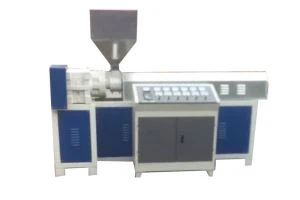


Features of Extruder
Precise Profile Formation
The precision of extrusion machines stretches to intricate profiles. They exert immense pressure on the heated aluminum billets to ensure the accurate replication of intricate figures and geometries. It makes dimensional precise, and consistent shapes that could meet stringent modern manufacturing requirements. In fact, extrusion machines can achieve dimensional tolerances as low as ±0.05 mm.
Versatility and Customization
The versatility of extrusion machines allows the creation of different-sized and shaped profiles, be it the simple angles, channels to, intricate hollow sections, or T-profiles. Such flex allows customization of profiles to design and application requirements. In relation to this, the extrusion market is poised to rise from 58 bn dollars to 126bn by 2030.
High Production Efficiency
Extrusion machines remain efficient even when it comes to high-speed production. Thu has minimal downtime. Now with the progressive extrusion process and advanced automation systems, it guarantees fast, uninterrupted, and flawless production flow. This results in significant time and cost savings for manufacturers, making aluminum extrusion an economically viable choice for large-scale production. Additionally, extrusion machines can achieve speeds of up to 90 meters per minute above the typical range. This ultimately enhances production efficiency and output.
Energy Efficiency and Sustainability
Extrusion machines’ energy efficiency makes them environmentally friendly options in any industrial manufacturing process. Typically every extrusion process will only need low-energy input. It’s so unlike the alternative metal-forming methods. At the same time, extrusion materials such as aluminum come through and are formidably highly recyclable materials. Its extruded profiles are easily reprocessed into new products. In return, it reduces waste while contributing to a circular economy.
Enhanced Material Properties
Throughout the extrusion process, metallic profiles go through a major material transformation. The extruders improve their mechanical properties. Even alloys can be accurately formulated for strength, toughness, and corrosion resistance. Plus, the Extrusion typically refines the microstructure of the material. As a result, you get a product with solid structural integrity and performance.
Types of Extruder
Single screw extruder
The single screw extruder is the basic model and works by feeding plastic material (granules, flakes, or powder) from a hopper into the extruder barrel. The material is gradually melted by a single screw and an agitated mixture produced by heaters designed along the feed tube. The molten plastic polymer is then extruded from the die to produce the plastic polymer in the desired finished appearance shape.
Co-rotating twin screw extruder
The plasticizing capacity of the twin-screw extruder is better and faster. Granular material stays in the extruder longer than a single-screw extruder, slowing down production time. So that plastics, additives, and fillers can be fully and evenly dispersed, stirred, compressed, and kneaded, and higher quality composite materials can be obtained.
Counter-rotating twin screw extruder
Counter-rotating twin-screw extruders generally use two screws of the same size but opposite screw directions. To strengthen the mixing effect, the screw adopts the structure of different thread head numbers, variable pitches, and mixing chambers. Compared with the co-rotating twin-screw extruder, the shearing is softer, the conveying capacity is strong, and the decompression capacity is strong.
Application of Extruder
Plastic Industry
Film Extrusion: Extruder machines are used to produce plastic films of varying thickness and properties for packaging applications, including food packaging, shrink wrapping, and industrial films.
Pipe and Profile Extrusion: Extrusion is employed in the manufacturing of plastic pipes, tubes, and profiles used in construction, plumbing, and automotive applications, offering cost-effective and durable alternatives to traditional materials.
Sheet Extrusion: Extruded plastic sheets are utilized in a multitude of applications, including signage, automotive interiors, and medical packaging, due to their lightweight, formability, and impact resistance.
Food Processing
Snack Foods: Extrusion technology is extensively used in the production of snack foods such as extruded snacks, breakfast cereals, and puffed snacks, offering a wide range of textures, shapes, and flavors to consumers.
Pasta and Extruded Products: Pasta and noodles are commonly manufactured using extruder machines, allowing for precise control over dough composition, texture, and shape to meet consumer preferences.


Pharmaceutical and Nutraceutical Industries
Tablet Manufacturing: Extrusion is utilized in the pharmaceutical industry for the production of tablets, granules, and pellets, enabling the precise dosing and controlled release of active ingredients in pharmaceutical formulations.
Nutraceuticals and Dietary Supplements: Extrusion technology is employed in the production of nutraceuticals and dietary supplements, including protein bars, energy bars, and functional foods, offering convenient and scalable solutions for meeting consumer demand.
Construction and Building Materials
Extruded Plastics: Extruded plastic materials such as PVC, ABS, and polycarbonate are used in the construction industry for applications such as window profiles, door frames, and roofing materials, offering durability, weather resistance, and thermal insulation properties.
Aluminum Extrusions: Aluminum extrusions are widely used in the construction of architectural structures, curtain walls, and interior fittings, offering lightweight, corrosion-resistant, and aesthetically pleasing solutions for modern buildings.
Components of Extruder
Feeder
The feeder of the extruder supplies raw materials to the screw of the extruder. To obtain a stable extrusion amount from the extruder, it is important to continuously supply a stable amount. If the amount suddenly increases or decreases, the amount coming out of the end of the extruder will also fluctuate.
Hopper
It plays a role in guiding and supplying resin materials to the screw by parts installed at the screw inlet of the extruder. Be careful not to cause clogging or bridging in this hopper. For materials that are prone to bridging such as powder, methods such as aeration by air nozzles or destruction of bridges by giving impact with knockers are also considered as means to prevent bridges.
Volumetric Feeder
This is a machine that automatically supplies materials to the hopper. A screw is attached to the bottom of the container, and this screw continuously discharges and supplies the material. The rotation speed of the screw can be controlled by an inverter, and this rotation speed adjusts the supply amount.
Gravimetric Feeder
A gravimetric feeder is a system that supplies resin raw materials while measuring their weight. The blending ratio of the input raw materials is always constant in weight ratio, making it possible to manufacture products with stable quality. Since there is no measurement by weight in volumetric feeders, it is not possible to manage how much of the input raw material is being supplied.
Side Feeder
The side feeder method is a method of adding additives or masterbatches by screw from an inlet provided in the cylinder. Normally, the raw materials are supplied to the hopper after being mixed in a tumbler or other device at a constant ratio.
Liquid Feeder
Used when injecting liquid additives.
Hopper Dryer
Some resin materials undergo “hydrolysis” when they contain moisture. For resins that are easily hygroscopic, such as nylon, and resins that are easily hydrolyzed, such as PET, the hopper may be equipped with a dryer function.
Screw Of The Extruder
The screw inside the cylinder melts the resin and carries it to the die at the end of the cylinder, where it is extruded by pressure. The structure and shape of the screw varies. The screw also causes a temperature rise due to shear of the resin.
Barrel (cylinder)
It is a cylindrical steel material that houses the screw that melts the resin of the extruder. The material is selected as a wear-resistant material or a corrosion-resistant material depending on the type of resin used and the type of filler added.
Heating By Extruder Heater
Heaters are used to heat the cylinder of the extruder. There are different types depending on the purpose.
Vent
It is a vent hole that is open in the cylinder of the extruder commonly used in recycling and is a vacuum port. By removing steam and generated gas from the vent, product quality can be improved.
Screen Changer
The screen is a metal mesh that is set at the tip of the cylinder and removes foreign matter and other resins mixed in with the melted resin. Usually, it ranges from about 20 mesh for the coarsest mesh to 200 mesh, and sometimes 500 mesh.
Working Principle of Extruder
Preparation of Feed Metal
The feed metal used as a raw substance in the extrusion process is known as a billet or ingot. However, the feed metal must adhere to the designers' specifications. Although other forms are possible, its typical profile is circular or square. The feed metal is produced using hot rolling or continuous casting techniques.
Preparation For Extrusion
After that, the standard basic material is put into extrusion machinery, and heated to the temperature advised for the hot extrusion technique. No preheating is needed because cold extrusion works at ambient temperature.
Metal Extrusion
The substance is now compressed during the extrusion process, which forces it in the direction of the die. The die has a tiny hole in it. When this procedure is complete, the pressure is relieved, and the product moves on to the next step.
Heat Treatment and Post-Processing
The product is now given heat treatment to improve its qualities and get it ready for its intended use. Different thermal treatment techniques are needed for various metals. For instance, in the case of aluminum, the extruded part is first cooled before being stretched and cut to the necessary lengths. The pieces go through an ageing procedure to become hardened, which involves heating them to 350°F and letting them cool for four hours.
The History and Development of Extruder
Extruding is an old manufacturing process. The process originated during the 18th century. Joseph Bramah invented the manual piston extruder to manufacture seamless lead pipes in the 1790s. Bramah’s invention is believed to be the world’s first extruder.
John Smeaton received a patent in 1818 for a twin-screw extrusion machine. Smeaton’s extruder had two screws that rotated around a central axis, creating pressure that forced the material through the machine.
Richard Brooman applied for a patent in 1845 for an extrusion machine modified by Henry Bewley. The extruder could coat copper wires with a rubber called Gutta Percha. The coated copper wires were supplied to the Submarine Telegraph Co. for cross-channel cables in the early 1850s.
Key Reasons Why Extruder Machines Should Not Stop

Continuous Production
Extruder machines continuously process plastic raw materials to produce final products. This ensures that products are consistently delivered to markets in demand, boosting business revenues.
Efficiency and Cost Savings
Continuous operation of extruder machines reduces operating costs. Stopping and restarting the machine can lead to time loss and increased energy consumption. Continuous production optimizes energy and material usage.
Product Quality
Running the machine at a constant speed during the extrusion process enhances product quality. Interruptions can lead to quality issues in the products.
Customer Satisfaction
Continuous production enables faster and more reliable responses to customer demands. This, in turn, increases customer satisfaction and strengthens customer loyalty.
Waste Reduction
Uninterrupted machine operation helps in reducing the amount of waste generated. Decreasing waste material costs while increasing environmental sustainability.
Some Problems Encountered with Extruders and Possible Solutions
Insufficient Material Flow
Problem: Irregular material flow or blockages in the extruder.
Solution: Regular maintenance of the material feeding system, appropriate temperature and pressure settings, regular cleaning of filters, and calibration.
Uneven Product Quality
Problem: Fluctuations in product quality due to uneven temperature profiles in extrusion.
Solution: Regular monitoring of temperature profiles, proper calibration, and effective use of cooling systems.
Material Degradation
Problem: Degradation or color changes in plastic material due to overheating.
Solution: Maintaining ideal extrusion temperatures, using cooling systems suitable for the material type.
Extruder Screw Wear
Problem: Wear or deformation of extruder screws.
Solution: Using high-quality materials, regular maintenance, and periodic checks of screws.
Deformation in Product Geometry
Problem: Undesired shape changes in extruded products.
Solution: Proper calibration, use of suitable cooling methods.
Air Bubbles
Problem: Formation of air bubbles in extruded products.
Solution: Checking the material feeding system, regular maintenance of vacuum systems.
Pulling Issues
Problem: Products not being properly pulled.
Solution: Regular adjustment of pulling speed and tension control, using appropriate pulling equipment.
Material Change Difficulties
Problem: Process disruptions during material changes.
Solution: Using fast and efficient material change systems, providing training to operators.
Noise Issues
Problem: Excessive noise during the extrusion process.
Solution: Regular equipment maintenance, vibration isolation, and implementation of noise control measures.
Product Cooling Problems
Problem: Products not cooling at the desired rate and in a uniform manner.
Solution: Effective use of cooling systems, control of cooling speed, and regular checking of airflow.
Tips to Help Extend the Lifespan of Extruder
01/
Regular Maintenance
Regularly maintaining machines is the most effective way to extend their lifespan. Maintenance procedures reduce wear and tear, helping prevent breakdowns.
02/
Proper Usage
It is important to use machines correctly and as required. Operator training and adherence to instructions contribute to the machine's longevity.
03/
Spare Parts Management
Proper storage and timely procurement of needed spare parts expedite machine repairs.
04/
Use Quality Materials
The quality of raw materials used for plastic extrusion affects the machine's lifespan. Protect the machine by using high-quality materials.
05/
Consider Environmental Factors
The environmental conditions in which the machine operates can impact its lifespan. Factors such as temperature, humidity, and others should be taken into account.
06/
Updated Technology and Software
Keeping the control software on the machine up to date can enhance efficiency and enable the early detection of malfunctions.
4 Tips for Easier Start-Ups for Large Extruders
Power Up Equipment And Heaters In Sequence
Start with whatever will take you the longest to reach your processing temps. Sometimes this might be a machine that processes at higher temps. Other times, it may be machines with parts that take longer to reach processing temps than the extruder zone. Consider heads, dies, and accessories.
Double-check To Make Sure That Your Heating And Cooling Systems Are Working Properly
It would not be good to realize two hours later that we have a resistance overheating due to a badly installed thermocouple or that the refrigerant does not circulate.
As Soon As You Review Your Production Schedule With Your Personnel Who Showed Up, Immediately Continue Turning On Other Necessary Equipment
For this section, consider:
a. The most urgent production.
b. Machines that require lower temperatures to start production.
c. Also, remember the machines that require higher temperatures that are adjusted in steps. Start with a low temp to gain time, and raise the temps only when an adjuster is ready and dedicated to start the machine. Consider that there may be distractions at start-up. It's common for a machine to be left waiting to start for extended periods of time. If you started raising the temperatures past a certain point at the beginning, you may be more likely to experience contamination.
Good Start-ups Are Dependent On How The Machines Were Shut Down
Even if you do everything right the morning of your production run, a bad shut down could lead to contamination issues because resin oxidizes in the barrel. Fortunately, purging compounds are designed to avoid this oxidation and will help you start-up with perfect parts in a fraction of the time.
Our Factory
Our Company, established in 2012. Our manufacturing factory is more than 6000m2, workers more than 60 person. Our working team have experienced more than 10 years on extrusion processing.It is one specialized is engaged in the twin-screw and single screw food expanding machinery enterprises, company with research and development, production, sales of all kinds of machinery and complete sets of equipment for the main business, my company brings together industry expert team work for ten years, not only in the best extrusion technology research, more efforts to continuously explore in terms of food technology, so that the customer production to the market leading food.

Ultimate FAQ Guide to Extruder
We're professional series of extruder manufacturers and suppliers in China, specialized in providing high quality products. We warmly welcome you to wholesale bulk series of extruder at competitive price from our factory.
packaging extruder, counter rotating twin screw extruder, extrusion equipment