

Why Choose Us?
Rich Experience
Our working team have experienced more than 10 years on extrusion processing.It is one specialized is engaged in the twin-screw and single screw food expanding machinery enterprises, company with research and development, production, sales of all kinds of machinery and complete sets of equipment for the main business, my company brings together industry expert team work for ten years, not only in the best extrusion technology research, more efforts to continuously explore in terms of food technology, so that the customer production to the market leading food.
Wide Product Range
Our mainly products: Snacks food extruder, fish food machine, dog food machine, pet food machine, puff snacks machine,core filling snacks machinery, Corn Puff Snack Extruder, pet chews food machine, pet snacks machine, corn flakes production line, lab twin screw extruder, twins screw extruder, double screw extruder, niknaks machine, cheetos food machine, textured soya protein food machine, soya nugget machine, pellets snacks production line, and so on…
Wide Range of Product Exports
At present, the company equipment exported to Europe, Egypt, Jordan, South Africa, Iran, Italy, France, the Netherlands, UK, Russia, Turkey, Ukraine, belarus, America: Canada, the United States, Chile, suriname, Brazil; Africa: Brazil, Malawi, mozambique, Nigeria and Congo (cloth), lesotho, Asia: Burma, Vietnam, the Philippines, Thailand, Indonesia, Malaysia, India, kazakhstan, kyrgyzstan, uzbekistan, north Korea, Afghanistan, Iran, Lebanon, tajikistan and other countries.
Excellent Customer Service
Installation + training: After delivery, according to the needs of the purchasing customer, the after-sales service personnel will arrive at the designated place of the customer, to install the equipment in time.
Service + tracking: After-sales service personnel need to do a follow-up survey of each customer responsible for their own use of equipment, and conduct detailed records and targeted problems to solve.
What is Pet Food Machine?
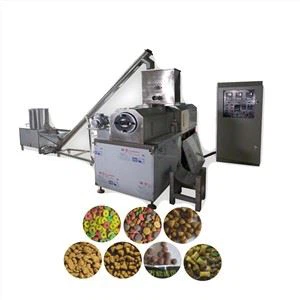
Pet food machine refers to machinery used in the manufacturing and processing of pet food products. This equipment is designed to efficiently mix, grind, cook, and package pet food to meet industry standards and regulations. The purpose of pet food processing equipment is to increase production efficiency, ensure product consistency, and enhance food safety for pets.
-

Catfish Feed making Machine
We are instrumental in offering Fish feed machinery to our clients. These are available in various Add to Inquiry -
Floating Fish Feed Making Machine
Fish Feed Machine,fish feed processing line, fish feed making machine,fish feed processing Add to Inquiry -
Pet food processing machinery
1.Pet food processing machine Main feature: It can make kinds of feed, such as food fish, catfish, Add to Inquiry -
Fish Feed Pellet Production Line
A floating fish feed production line is an advanced and efficient system used for manufacturing Add to Inquiry -
Sinking Fish Feed Making Equipment
Fish feed machine is a piece of equipment designed to produce fish food pellets,it is mainly Add to Inquiry -
Industrial Fish Feed Pellet Making Machine Fish Pellet Ma...
Extruder for fish feed production process is deliberately made for special feed, which needs high Add to Inquiry -
Twin Screw Pet Food Extruder Processing Line
pet and animal food production line uses foodstuff, meat powder, fishmeal, and beans etc. as raw Add to Inquiry -
Dog Food Manufacturing Machine
HIMAX pet and animal food production line uses foodstuff, meat powder, fishmeal, and beans etc. as Add to Inquiry -
Pet Food Extrusion Processing Line
HIMAX pet and animal food production line uses foodstuff, meat powder, fishmeal, and beans etc. as Add to Inquiry -
Floating Fish Feed Pellet Extruder Machine
Extruder for fish feed production process is deliberately made for special feed, which needs high Add to Inquiry -
Fish Feed Making Machine Full Production Line
Aquatic feed made by our twin screw extruder machine. By help of minerals, rich nutritional content Add to Inquiry -
Dog Cat Food Making Machine Full Production Line
Pet feed produced by our twin-screw extruder. Mainly using corn flour, fish meal, meat meal and Add to Inquiry


Advantages of Pet Food Machine
Quality And Safety
Pet food machine can produce dog food products that are safe, nutritious, and tasty for dogs. The machinery can also eliminate harmful bacteria, such as Salmonella, by using methods like high-pressure processing (HPP) or in-container sterilization.
Flexibility And Variety
Pet food machine can produce different types of dog food products, such as wet, dry, fresh, frozen, raw, or canned dog food, by changing the raw materials, molds, or processing parameters. The machinery can also create various shapes, sizes, colors, and flavors of dog food products to suit the preferences of different dogs.
Efficiency And Productivity
Pet food machine can increase the efficiency and productivity of dog food production by automating the mixing, extruding, forming, steaming, cooking, filling, closing, and tray sealing processes. The machinery can also reduce the waste, energy consumption, and labor costs of dog food production.
Innovation And Differentiation
Pet food machine can enable pet food manufacturers to create innovative and differentiated products that meet the diverse and evolving needs and preferences of pet owners and their dogs. The machinery can also help pet food manufacturers to gain a competitive edge in the market by offering unique and customized solutions for different segments, such as breed, size, age, lifestyle, or health condition.
Customer Satisfaction And Loyalty
Bone grinder machines for dog food can enhance customer satisfaction and loyalty by producing high-quality, safe, and nutritious dog food products that appeal to the palates and well-being of dogs. The machinery can also help pet food manufacturers to build trust and reputation with their customers by providing transparent and traceable information about the ingredients, sources, and processes of their products.
Types of Pet Food Machine
Mixers
Industrial mixing is one of the most important types of food processing equipment, including pet food. Large-scale mixers make it possible to mix ingredients quickly, efficiently, and uniformly, processing 5, 10, even 15 tons of material at one time. These mixers are also capable of working with a wide range of materials, including very fine powders to thick liquids and tough solids. For pet food processing, mixers can be important at several points, from mixing cornmeal and other grains to oils and fats, meat-based products, and more. Without large-scale pet food mixers, it would be difficult to process the amount of food we would need to reliably and affordably feed our pets.
Extruders
Extruders push mixed material, usually a dough or a paste, through a metal die to create uniform pieces. Extruders are important pet food processing equipment because they make it easy to create food that is easy to package, ship, and store. Extruders also create nutritionally uniform pellets, removing the guesswork in balancing protein, fats, carbohydrates, vitamins and minerals. In addition, these pellets are easy to work with, so they can be easily coated with flavorings and fats.
Spray Coating
Adding fats and flavorings to kibble is important for making the food palatable for pets, but it’s also important to ensure that the pets get the right amount of fats, vitamins and minerals in their diet. Spray coating makes it easy to add liquid coatings to pellets. This process is both fast and efficient, so the pellets can move through the process quickly and get to packaging and then on to the customer and their pet.
Mist Coating
Mist coating takes liquid coating one step further, making it even easier and faster to apply liquid coatings to pellets. Mist coating equipment uses an atomizing system which turns liquid coatings into a fine mist, which evenly coats the material as it falls through the coating chamber. When comparing liquid coating systems, mist coating is one of the most efficient methods, since it provides more even coating, reduces waste, requires less clean-up, and tends to be gentler on the pellets, decreasing breakage and loss.
Track and Tracing
Track and tracing systems, which can include a wide range of equipment, are essential to all modern-day food systems, and pet food is no exception. By tracking materials and finished products through each process, and then on to retailers and customers, it’s possible to detect where contamination exists, and stop contaminated products before they do more damage. Though other processes are designed to kill bacteria and tests are designed to detect dangerous chemicals, no process is 100% effective. When bacteria or other dangers make their way into pet food, track and trace systems can show where the contamination came from, and pull the contaminated goods from the shelf as quickly as possible.
Market Trends in the Pet Food Machine Market
● Adoption of automation and robotics in pet food processing equipment to improve efficiency and reduce labor costs.
● Increased demand for premium and customized pet food products, driving the need for flexible and versatile equipment.
● Growing consumer awareness of the importance of healthy and natural ingredients in pet food, leading to the development of equipment that can handle these ingredients.
● Integration of Internet of Things (IoT) technology in pet food processing equipment for real-time monitoring and predictive maintenance.
● Industry disruptions such as mergers and acquisitions leading to consolidation of market players and introduction of new technologies.
● Sustainable and eco-friendly practices gaining importance, influencing the design and manufacturing of pet food processing equipment.
How to Make Dry Dog Food by Pet Food Machine
Mix The Ingredients
Depending on the type of food to be manufactured, you can mix the ingredients to form moist dough. For dogs, you should select ingredients such as meat, sea food, soybean meal and poultry among others. You may grind dry ingredients before mixing with wet ones.
Heating
Once you have the ingredients mixed, heat the dough in the preconditioner before introducing in the extruder.
Primary Cooking
Here, the moist dough is cooked under high temperature and pressure as it is passed to the open end of the extruder. Moist dough dries out in the process of intense heating and hot dough is delivered at the end of the extruder into a shaping die and knife where small pieces expand rapidly into kibble as soon as they come into contact with standard air pressure.
Drying Of The Kibbles
At this section, the moisture content of the kibble is lowered up to 10-15%. Low moisture increases the shelf life of your dog`s food.
Cooling Phase
The heating process at the oven produces a lot of heat which should be lowered by cooling.
Coating
Some pet pet food machines are designed with a device that sprays on a coating of flavor enhancers.
Packaging
You can package the kibbles into pouches, bags, boxes and etc. depending on your choices and preferences after weighing them according to the label indicated on the packages.
Sterilizing
You can sterilize the dog foods by heating or passing through a retort chamber at a temperature of 121ºC for 1 hour then cooled ready for distribution.
Common Challenges in Pet Food Machine Production
Consistency
As with most processed food, maintaining consistency across large production volumes can be challenging. This becomes an even bigger problem if batch cooking process is in use. With batch cooking, you waste a substantial amount of time to process each batch, often having to wait to fill from a large buffer tank. This staging, with varying dwell times before filling can magnify inconsistencies, leading to temperature loss and changes in pressure, moisture and texture, further overcooking without necessarily hydrating.
Production Volumes
As part of the fast-moving consumer goods industry, pet food is generally sold at low profit margins, so high production and sales volume are key to long-term survival and a successful pet food business. With batch processing, gaps in production are often a part of daily operations. The batch process is more time consuming, with time allocated for preparing each batch, mixing the ingredients, heating the formulation, adjusting settings, waiting to fill before starting the next batch and rinsing.
Quality
Many recipes use a variety of different ingredients - yours might combine vegetables, meat and fish, as well as powders, by-products and grains. Like we mentioned above, temperature, moisture and pressure fluctuate between batches, affecting the final composition and causing unpredictable ingredient usage.
Pet Food Machine Market Growth Prospects
The pet food machine market is expected to witness a cagr of approximately % during the forecast period, driven by innovative growth drivers such as increasing pet ownership, changing consumer preferences towards premium and organic pet food products, and the growing trend of humanization of pets.
Innovative deployment strategies such as the incorporation of advanced technologies like automation, robotics, and artificial intelligence in pet food machine can significantly increase efficiency, reduce operational costs, and enhance product quality. Additionally, the adoption of sustainable and eco-friendly practices in manufacturing processes can attract environmentally conscious consumers and create a competitive edge in the market.
Trends such as the rise of e-commerce platforms for pet food products, customization of pet food recipes based on pet health needs, and the introduction of functional and natural ingredients in pet food formulations can further fuel the growth prospects of the pet food machine Market. Overall, focusing on innovation, sustainability, and consumer preferences will be key drivers for the market's success in the coming years.
How Pet Food Machine Processing Affects Pet Food
Extrusion: the crunch on crunch
Once the preconditioning process is complete, the mash transfers (typically drops by gravity feed) into the extruder. At its simplest, the extruder is a screw or auger within a barrel. It serves several functions: conveyance (pumping), high-intensity mixing (shear), starch cooking (gelatinization), piece formation and expansion. The physics are such that as we increase the flights per turn, it compresses the mash as it moves to the end of the barrel and the pressure increases. This process adds friction (mechanical energy) that is transferred as heat to the product. The ration particle size, level of moisture and fat can each affect the amount of energy that gets transferred from the screw to the ration. The trick is finding the right combination of screw configuration, revolutions per minute (RPM), pressure, moisture and heat to optimize the process for the individual product.
Drying the extruded kibbles
Today, much of this conveyance from the extruder to the dryer is accomplished with dense phase pneumatic systems that reduce the deformation and breakage associated with traditional belt and screw conveyors, though some still use auger and belt systems. Modern drying equipment involves a massive volume of hot, dry air to take advantage of the differential in moisture that must be removed from the kibble. These drying chambers are typically belted with a bed of kibble being moved from one end to the next, often making two or three passes as it becomes increasingly drier. The process is continuous and matches the inflow from the extruder while allowing the proper amount of time for the moisture trapped within the kibble to exit the structure and exhaust from the equipment.
How to Avoid Pet Food Recalls Produced by Pet Food Machine
01/
Adequate Cooking, Regular Testing
It may seem obvious, but proper cooking is one of the best ways to avoid recalls in pet food processing. This may seem pretty straight-forward at first, but properly cooking pet food can present some difficult challenges. In particular, Salmonella, Listeria, and E.Coli bacteria, the most common causes of contamination and food recalls, can find protected pockets in foods with high fat and oil content. This is why adequate cooking, as well as uniform mixing are essential.
02/
Batch Separation and Cleaning
Contamination can spread quickly without proper separation and cleaning. A lack of batch separation and cleaning resulted in one of the most famous cases of a food recall. If the facility had clear procedures for separating batches and sanitizing equipment between each batch, the contaminated meat would’ve affected a limited number of products. However, the leftover ingredients from one batch were incorporated into the next, so the contamination spread.
03/
Automated Routing
Bacteria is one way that a recall can occur, but sometimes the wrong ingredients can also cause recalls. If ingredients aren’t properly routed to the correct bin when they’re received, the final product won’t contain the right ingredients. This is especially important for recipes that add vitamins and minerals into the mix. In some cases, a worker might push a button or a lever to route materials to the right bin.
04/
Maintaining Pet Food Machine
One source of recalls in pet food processing, as well as food for human consumption, is metal fragments. This can be especially dangerous. If ingested, metal fragments can seriously damage internal organs. In some cases, metal fragments get picked up during grain harvesting, and these fragments then make their way into pet food. In other cases, metal fragments may make their way into pet food from damaged machines.
05/
Separating Chemicals
Working with any kind of food means combating pests. This often requires pest control, including insecticides, traps, or poison. It might seem obvious, but it is essential to keep these substances safely separated from ingredients and processing equipment. When dealing with a pest problem, it’s easy for potentially dangerous chemicals to get too close to food and equipment. Make sure that the procedures for storing and using these substances are clear, and that all employees are aware of these procedures.
06/
Microingredient Systems
Microingedients are only a small part of the overall product, but they’re an important part. If these ingredients aren’t added in the right amount, it can seriously disrupt the mix. If the pet food formula doesn’t include the right amount of vitamins, minerals, enzymes, palatants and other microingredients, it can be unhealthy or simply unappealing to pets. An automated microingredient system can measure and meter microingredients with a high level of accuracy.
Our Factory
Our Company, established in 2012. Our manufacturing factory is more than 6000m2, workers more than 60 person. Our working team have experienced more than 10 years on extrusion processing.It is one specialized is engaged in the twin-screw and single screw food expanding machinery enterprises, company with research and development, production, sales of all kinds of machinery and complete sets of equipment for the main business, my company brings together industry expert team work for ten years, not only in the best extrusion technology research, more efforts to continuously explore in terms of food technology, so that the customer production to the market leading food.

Ultimate FAQ Guide to Pet Food Machine
We're professional pet food machine manufacturers and suppliers in China, specialized in providing high quality products. We warmly welcome you to wholesale bulk pet food machine at competitive price from our factory.
food grade extruder, furniture extruder, automatic extruder