

Datong Extrusion Machinery: Your Professional Pasta Production Line Manufacturer!
Jinan Datong Extrusion Machinery Co.,Ltd was founded in 2012. Our company manufactures a full range of extrusion and puffing equipment, with diverse products, complete after-sales services, and complete supporting facilities. Customers can purchase all the required equipment in one stop. It is currently the main professional manufacturer, manufacturer and R&D manufacturer of extrusion and puffing equipment and its supporting equipment in China.

Our Advantages
Rich Experience
Our working team have experienced more than 10 years on extrusion processing.It is one specialized is engaged in the twin-screw and single screw food expanding machinery enterprises, company with research and development, production, sales of all kinds of machinery and complete sets of equipment for the main business, my company brings together industry expert team work for ten years, not only in the best extrusion technology research, more efforts to continuously explore in terms of food technology, so that the customer production to the market leading food.
Wide Product Range
Our mainly products: Snacks food extruder, fish food machine, dog food machine, pet food machine, puff snacks machine,core filling snacks machinery, Corn Puff Snack Extruder, pet chews food machine, pet snacks machine, corn flakes production line, lab twin screw extruder, twins screw extruder, double screw extruder, niknaks machine, cheetos food machine, textured soya protein food machine, soya nugget machine, pellets snacks production line, and so on.
Wide Range of Product Exports
At present, the company equipment exported to Europe, Egypt, Jordan, South Africa, Iran, Italy, France, the Netherlands, UK, Russia, Turkey, Ukraine, belarus, America: Canada, the United States, Chile, suriname, Brazil; Africa: Brazil, Malawi, mozambique, Nigeria and Congo (cloth), lesotho, Asia: Burma, Vietnam, the Philippines, Thailand, Indonesia, Malaysia, India, kazakhstan, kyrgyzstan, uzbekistan, north Korea, Afghanistan, Iran, Lebanon, tajikistan and other countries.
Excellent Customer Service
Installation + training: After delivery, according to the needs of the purchasing customer, the after-sales service personnel will arrive at the designated place of the customer, to install the equipment in time.
Service + tracking: After-sales service personnel need to do a follow-up survey of each customer responsible for their own use of equipment, and conduct detailed records and targeted problems to solve.
-

Instant Pasta Production Line Instant Pasta Cup Machine
we provide instant pasta making machine .As an instant food, this instant pasta does not require Add to Inquiry -
Italy Pasta Production Line
Instant pasta production line adopts the durum wheat flour as the raw material forming into various Add to Inquiry -
Instant Macaroni Making Machine
Instant pasta production line adopts the durum wheat flour as the raw material forming into various Add to Inquiry -
Industrial Pasta Production Line Macaroni Making Machine
Instant pasta production line adopts the durum wheat flour as the raw material forming into various Add to Inquiry -
Pasta Production Line Macaroni Making Machine
Instant pasta production line adopts the durum wheat flour as the raw material forming into various Add to Inquiry -
Pasta Making Production Line
HIMAX industrial pasta making machine/line/plant/industry pasta making machine/macaroni pasta Add to Inquiry -
Single Screw Pasta Making Machine
The single screw extruder pasta machine are loaded with powerful parts that are highly effective Add to Inquiry -
Rice Straw Machine
The rice straw machine production process of rice straw in automatic rice straw production line is Add to Inquiry -
Pasta Processing Line
The pasta processing line adopt vacuum negative pressure cold extrusion technology to make Add to Inquiry -
Drinking Rice Straw Making Machine
DATONG Drinking Straw Making Machine is suitable for making Biodegradable Edible Ecoware Rice Add to Inquiry -
Bio-degradable Rice Eatable Straw Production Line
Degradable Colorful Edible Rice Straw Manufacturer IntroductionBiodegradable rice drinking straw Add to Inquiry -
Extruded Pasta Macaroni Food Extrusion Machine
This pasta macaroni processing machines are also known as the shells crisp machine, hemp food Add to Inquiry


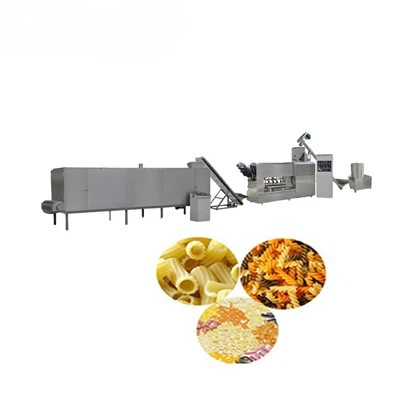


Introduction to Pasta Production Line
A pasta production line is made up of a series of machines that work together to produce large quantities of pasta. The most common type of pasta production line is the extrusion process, which uses high-pressure and high-heat to extrude the dough through a die. This type of production line can produce a variety of shapes and sizes of pasta. The advantage of using a pasta production line is that it is much faster than making pasta by hand. It can also produce a consistent product that is less likely to have defects. Pasta made on a production line is also typically cheaper than handmade pasta because the machines can produce more noodles with less labor.
Types of Pasta Machines in a Production Line
01/
Extruders
Extruders are pivotal in the pasta production line, designed to produce a variety of shapes by pushing dough through dies. The choice of die material, commonly bronze for a rough texture or Teflon for a smooth finish, impacts the pasta's final appearance and cooking characteristics. Industrial machines range in capacity, from 50 kg/h to over 1000 kg/h, tailored to production volume requirements.
02/
Packaging Machines
Automated packaging machines are the final step in the production process, where precision is critical. Scales with accuracy up to ± 0.5 grams, and high-speed wrapping systems ensure products are ready for distribution. These machines support various packaging formats, including bags, boxes, and trays, equipped with technology for nitrogen flushing to extend shelf life.
03/
Laminators
Laminators are utilized to produce sheet pasta like lasagna or for the further processing into shaped pasta. Sophisticated rollers progressively thin the dough sheets to desired thicknesses, while sensors ensure uniformity with precision tolerances ±0.1 mm, an essential factor in consistent cooking quality.
04/
Cutters
Cutters are engineered to slice sheets of pasta dough into strands or shapes. High-speed rotating blades or wires achieve precise cuts for products like spaghetti or fettuccine. These machines synchronize with laminators to match production speeds, ensuring a seamless operation.
05/
Dryers
Customized drying equipment is crucial for texture and longevity of pasta. Programmable logic controllers (PLCs) automate the process, adjusting temperature, humidity, and time parameters to ensure consistent drying that aligns with pasta type and thickness. Modern dryers are also equipped with recovery systems to recycle heat, enhancing energy efficiency.
06/
Molders
Molders are specialized machines designed for complex pasta shapes like rigatoni or rotini. Using a combination of extrusion and molding techniques, these machines maintain dough integrity while achieving intricate contours and ridges. They feature adjustable parameters to accommodate various dough recipes and shapes.
Working Process of Pasta Production Line
Mixing and Kneading
The first step in the process is mixing. The semolina is stored in giant silos that has a holding capacity of about 68,100 kgs. The Flour is moved to the mixing machine through pipes. Warm water is also piped to the same mixing machine to knead the mixture.
Flavouring and Colouring
If the product is an egg noodle then the eggs are added to the mixture. Vegetable juices, herbs and spices are added to the pasta if a flavoured variety has to be produced.
Rolling
The final mixture is moved to the laminator where it pressed into sheets by large cylinders. The dough is flattened by a vacuum mixing machine while pressing air bubbles and excess water from the dough to arrive at the optimum water content of 12%.
Pasteurization
The dough roll is then moved through a steamer that heats it to 104°C (220°) to make sure that it is free from bacteria.


Cutting
The dough is given the shape according to the type of pasta that has to be produced. The pasta and macaroni manufacturers in India use different machines for producing different shapes of pasta.
Drying
After cutting the next step in the process is drying. The pasta is placed in the drying tank where the moisture, heat and drying time are strictly regulated.
Packaging
The dried pasta is folded in pre-measured amounts and filled into plastic containers. These containers are passed through a conveyer belt where these containers are sealed with a hot press. During the process, a small tube sucks the air of the container and replaces it with a mixture of nitrogen and carbon-di-oxide to increase the shelf life of the product.
Benefits of Pasta Production Line
Highly Automated
Pasta production line is advanced automated production machinery. It is a piece of highly technological equipment with one occasion molding and great noodles kneading processes.
It provides simple operation, instrument monitoring, automatic molding, reduces working time, and also lessens the labor force.
Production Efficiency
In combination with the advanced technology and spot-on quality system, pasta production line has fast production efficiency and high success rate of products. The quality production inspection is 100%. Their investment scale and occupying space are small but are suitable for both individual processing workshops and municipal food processing companies.
Continuous Operation
The production process of pasta production machines with numerous rollers gives unceasing rolling methods, pressing, kneading, and later cutting into noodles. This production operation can be carried out ceaselessly.
Flexibility
Pasta production line is used in producing various kinds of noodles. The cutting knife can be changed to produce various sizes, thicknesses, and shapes of noodles.
Fresh noodles production machines can be used in numerous cooking processes to satisfy people with different tastes.
Service Life
Pasta production line is crafted from nickel-chromium alloy – a twofold metal made with centrifugal casting.
This type of manufactured machine ensures longevity, smooth wear forbearance, and quality production of noodles.
Safety
The production process of pasta production line is environmentally friendly, meaning no pollution. It is generally safe, healthy, and hygienic to use.
Key Components of a Pasta Production Line
Mixing and Kneading Machines
These are used to combine the raw materials into a consistent, homogenized dough. They achieve this through precise control of the mixing speed and kneading time, which varies depending on the pasta type.
Extrusion Equipment
This machinery is central to the shaping of pasta and features interchangeable dies that are specific to each pasta shape. High extrusion pressures are managed and monitored to ensure dough integrity.
Pre-drying and Cutting Equipment
Before full drying, pasta is often pre-dried to a specific moisture content. Accurate cutting equipment is used thereafter to size the pasta appropriately.
Drying Tunnels
Equipped with carefully calibrated temperature and humidity controls, these tunnels remove moisture to stabilize the pasta, targeting optimal drying rates and final moisture content.
Cooling Systems
Before packaging, pasta is cooled down to ambient temperature to stabilize its structure and ensure that it does not clump together during storage.
Quality Control Stations
Implemented at various stages, these stations utilize sensors and cameras to detect any flaws in pasta shape, size, and surface quality.
Packaging Lines
The final pasta product is transferred to packaging lines, where it is weighed, sealed, and labeled, employing mechanisms that protect against contamination and damage during transit.
Considerations For Choosing the Right Pasta Production Line
Production Capacity
- Assess Your Needs: Evaluate your current production demands and future growth expectations to determine the appropriate scale of machinery. It’s critical to opt for a production line that can not only meet your immediate requirements but also scale up as your business expands.
- Efficiency vs. Flexibility: Consider whether your priority is maximizing output (efficiency) or having the flexibility to produce different types of pasta. Some machines are highly specialized, offering greater efficiency for a single product type, while others provide versatility at the cost of lower output rates.
Quality of Materials
- Durability and Maintenance: Investigate the construction materials of the pasta production line. High-quality, durable materials such as stainless steel can ensure longevity and reduce downtime due to maintenance.
- Compliance with Standards: Ensure that the materials used in the machine and its construction comply with the food safety and quality standards applicable in your region. Compliance not only ensures safety but may also impact the ease of getting product certifications and entering new markets.
Supplier Reputation and Support
- Research the Supplier: Conduct thorough research on the manufacturer or supplier of the pasta production line. Look for reviews, case studies, or testimonials from current or past customers to gauge the reliability and quality of the machinery.
- Post-Sale Support: Verify the level of support the supplier offers after the sale. This includes training for your staff on operating the machinery, availability of spare parts, and responsiveness to maintenance requests. Excellent post-sale support can significantly reduce potential operational disruptions.
FAQ
We're professional pasta production line manufacturers and suppliers in China, specialized in providing high quality products. We warmly welcome you to wholesale bulk pasta production line at competitive price from our factory.
custom pasta production line, pasta cooker, versatile pasta making machine